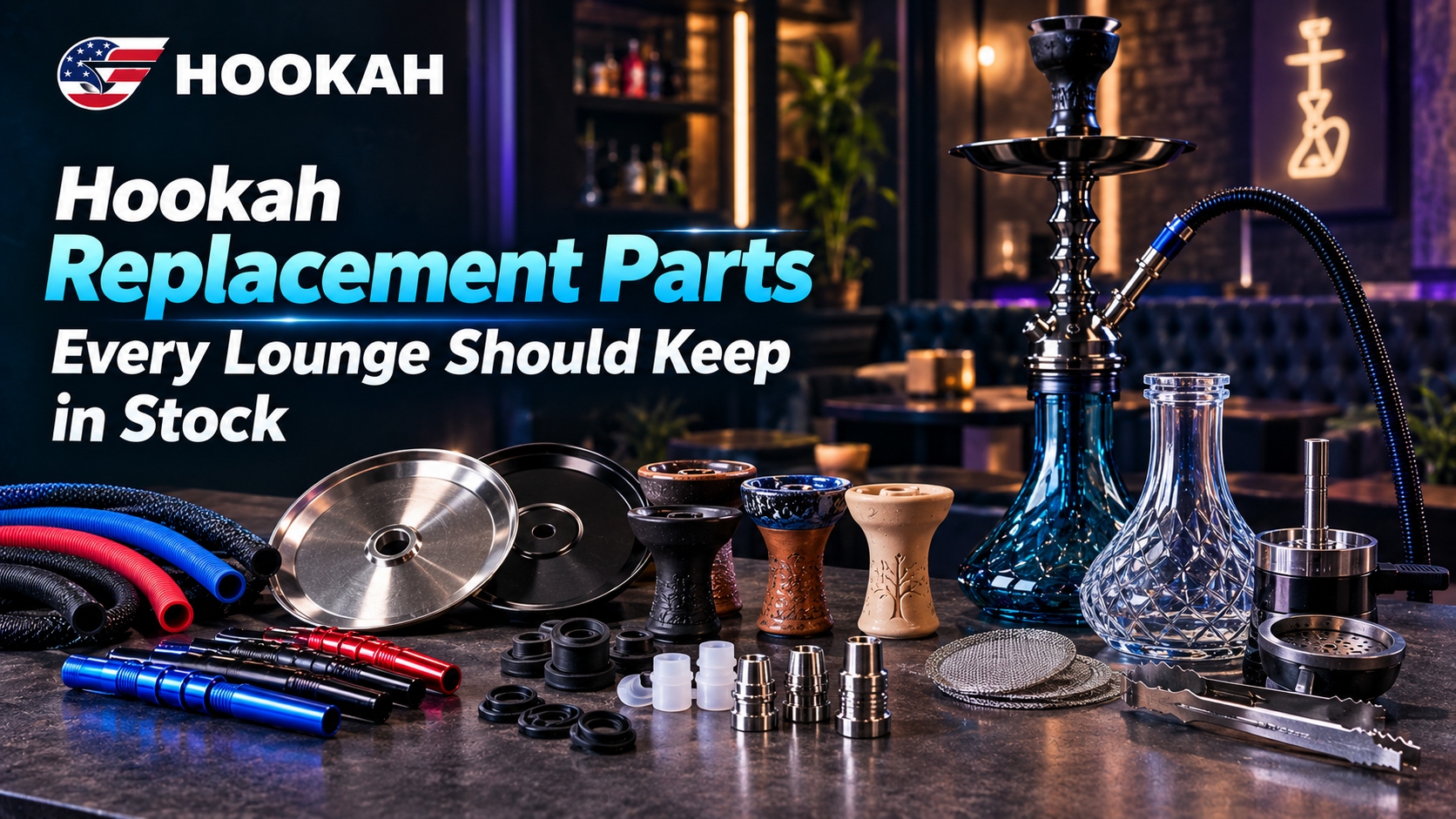
For a hookah lounge, a damaged or missing component can turn a usable setup into an unavailable table. The problem is rarely the complete hookah itself. More often, it is a hose, valve, seal, connector, mouthpiece, bowl, or another smaller component.
That is why hookah replacement parts should be treated as part of a lounge’s operating inventory.
Keeping the right spare parts on hand helps staff deal with routine wear, accidental damage, cleaning issues, and equipment changes without waiting for an entire hookah to be replaced.
Why Replacement Parts Matter in a Lounge
A lounge may use the same equipment repeatedly throughout the week. That creates a different maintenance requirement from a home smoker who uses one hookah occasionally.
Common problems include:
- Damaged hoses
- Worn seals
- Missing valve components
- Broken bowls
- Loose connectors
- Damaged mouthpieces
- Worn grommets
- Lost small components
A lounge does not necessarily need a replacement for every part of every hookah. It needs a practical spare-parts system based on the equipment actually being used.
Start With the Parts That Cause the Most Downtime
The first step is to identify components that can make an otherwise usable hookah unavailable.
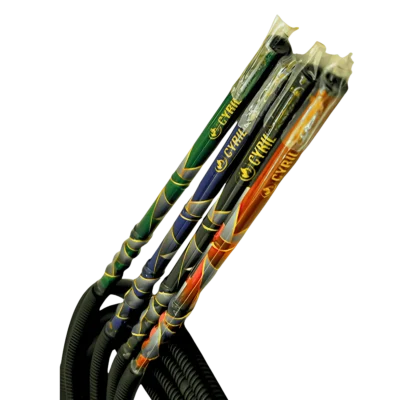
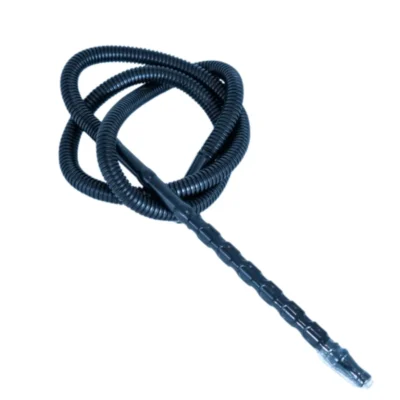
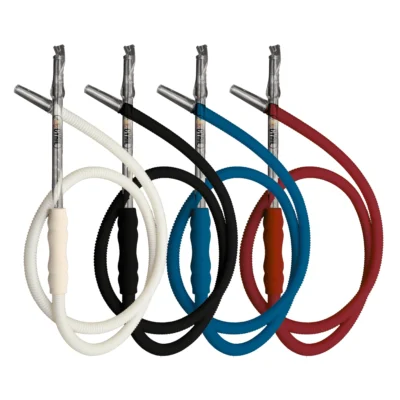
Hoses
Hoses are among the most practical replacement items for a busy lounge.
They are handled frequently, moved between tables, cleaned, and exposed to regular wear.
Keep spare hoses that match the lounge’s primary hookah systems.
For example, the Steamulation Silicon Hose Soft-Touch is designed to fit common adapters and nozzles, although compatibility should always be checked against the specific setup.
Mouthpieces
Mouthpieces are small, easy to lose, and important for hygiene and customer service.
A lounge should have a sufficient supply of disposable or replaceable mouth tips depending on its operating model.
Seals and Grommets
A small seal can cause a significant problem if it creates an air leak.
Keep replacement seals for:
- Bowl connections
- Hose connections
- Base connections
- Valve areas
Because these parts are inexpensive compared with complete hookahs, maintaining a small backup inventory is generally practical.
Keep Extra Bowls Available
Bowls are exposed to heat and can break through accidental drops or rough handling.
A lounge should maintain spare bowls that work with its standard hookah setups.
Standardizing bowl types can simplify operations because staff become familiar with one or two preferred configurations.
It also reduces the number of different replacement parts the lounge needs to manage.
Valves and Connectors
Valves and hose connectors can vary significantly between hookah systems.
This is where inventory planning becomes important.
A lounge using multiple brands should maintain a simple compatibility record showing which replacement valve or connector belongs to which hookah.
A replacement part that looks similar is not automatically compatible.
Understand the Hookah’s Anatomy
Staff should understand the basic components of every hookah used in the lounge.
The hookah anatomy guide for retail buyers explains the main components and their roles.
For lounge operations, staff should be able to identify:
- Bowl
- Stem or smoke column
- Downstem
- Base
- Hose port
- Purge valve
- Seals
- Diffuser
- Tray
- Hose
This basic knowledge makes troubleshooting much faster.
Keep Parts Organized by Hookah Brand
One of the easiest ways to create replacement-part confusion is storing everything together without labeling.
Instead, organize parts by:
Brand → Model → Component
For example:
- Steamulation
- Hose adapter
- Seal
- Valve
- Other hookah brand
- Hose connector
- Purge component
- Grommet
If your lounge uses many models, add photographs or model numbers to the storage system.
Modular Hookahs Change the Replacement Strategy
Modern modular hookahs are often designed around interchangeable components.
That can make maintenance more manageable because individual parts can be replaced instead of treating the entire hookah as one unit.
GT Hookah’s article on how modular hookah design changed the premium market explains why modular construction has become increasingly important in modern hookah design.
For lounges, the practical advantage is straightforward: maintain the parts that are actually replaceable.
Build a Lounge Spare-Parts Kit
A basic spare-parts inventory could include:
- Extra hoses
- Mouthpieces
- Bowl grommets
- Base grommets
- Hose seals
- Valve seals
- Replacement bowls
- Common hose adapters
- Diffusers where applicable
- Small valve components
The exact quantity depends on the number of hookahs in operation.
A lounge with ten hookahs does not necessarily need the same inventory as one operating fifty.
Use a Minimum Stock Level
Set a minimum quantity for important parts.
For example:
High-priority
- Hoses
- Mouth tips
- Common seals
- Bowls
Medium-priority
- Hose adapters
- Valves
- Diffusers
Model-specific
- Specialty components
- Proprietary connectors
- Brand-specific parts
When inventory reaches the minimum level, include those items in the next purchasing order.
Inspect Parts Before They Fail
Preventive inspection is better than discovering a problem while a customer is waiting.
Staff can check:
- Hose condition
- Seal condition
- Loose connections
- Bowl cracks
- Valve operation
- Base condition
- Downstem condition
This should be part of routine closing or opening procedures.
Standardize Where Possible
A lounge that uses ten different hookah models may face more compatibility challenges than one using three standardized setups.
This does not mean lounges should avoid variety. It means they should understand the operational cost of excessive variety.
Standardization can make:
- Training easier
- Replacement inventory simpler
- Troubleshooting faster
- Cleaning procedures more consistent
- Purchasing more predictable
Consider the Cost of Downtime
A replacement hose may be inexpensive compared with the operational inconvenience of taking an entire hookah out of service.
This is why replacement inventory should be evaluated based on availability and operational impact rather than unit price alone.
The goal is not to overstock.
The goal is to have the parts that are most likely to keep your working inventory operational.
Hookah lounges should generally keep spare hoses, mouthpieces, bowls, grommets, seals, valves, connectors, and other model-specific components used by their equipment. The exact inventory should be based on the lounge’s hookah brands, models, session volume, and most common maintenance issues.
FAQs
What are the most important hookah replacement parts for lounges?
Hoses, mouthpieces, bowls, seals, grommets, and common connectors are practical starting points. Model-specific parts should be added based on the equipment used.
How many spare hoses should a hookah lounge keep?
There is no universal number. A lounge should maintain enough spare hoses to replace damaged or unavailable hoses without taking working hookahs out of service.
Should lounges stock replacement bowls?
Yes. Bowls are exposed to heat and can be damaged during handling, so keeping compatible replacements is useful.
Are hookah replacement parts universal?
No. Some components are widely compatible, but many parts are brand- or model-specific. Compatibility should be verified before purchasing.
Why are seals important?
A damaged or incorrect seal can allow air leakage and affect the hookah’s draw. Small seals are therefore important maintenance components.
Should a lounge standardize its hookah models?
Standardization can simplify staff training, maintenance, and replacement inventory. However, the right level of variety depends on the lounge’s concept and customer needs.
Conclusion
For a busy lounge, hookah replacement parts are operational necessities rather than optional extras. Hoses, bowls, seals, mouthpieces, valves, and connectors can determine whether a hookah remains available for customers.
The most effective approach is to inventory parts according to the actual equipment in use, label them clearly, establish minimum stock levels, and inspect equipment regularly. GT Hookah’s broad hookah and accessory selection can help wholesale buyers build a practical maintenance inventory around their existing setups.