Choosing the right hookah tobacco pack sizes is an important inventory decision for smoke shops, retailers, and hookah lounges. Two businesses can sell the same flavor but need completely different package quantities.
A smoke shop may benefit from smaller packs that make it easier for customers to try new flavors. A busy lounge may need larger quantities because the tobacco is consumed as part of regular service. Wholesale buyers may need a combination of sizes depending on the accounts they serve.
The right approach is to match pack size with customer behavior, sales velocity, storage capacity, and purchasing frequency.
Why Pack Size Matters
Pack size affects more than the amount of tobacco in a package.
It can influence:
- Retail price
- Customer trial behavior
- Inventory turnover
- Storage requirements
- Cash tied up in inventory
- Reorder frequency
- Product freshness
- Wholesale purchasing efficiency
A retailer who only stocks large packs may make trial purchases less accessible. A lounge that buys only small packs may spend more time managing frequent reorders.
That is why pack size should be considered alongside flavor and brand.
Common Hookah Tobacco Pack Sizes
The most useful sizes depend on the brand and market, but businesses commonly encounter small retail packs, medium packs, and larger bulk formats.
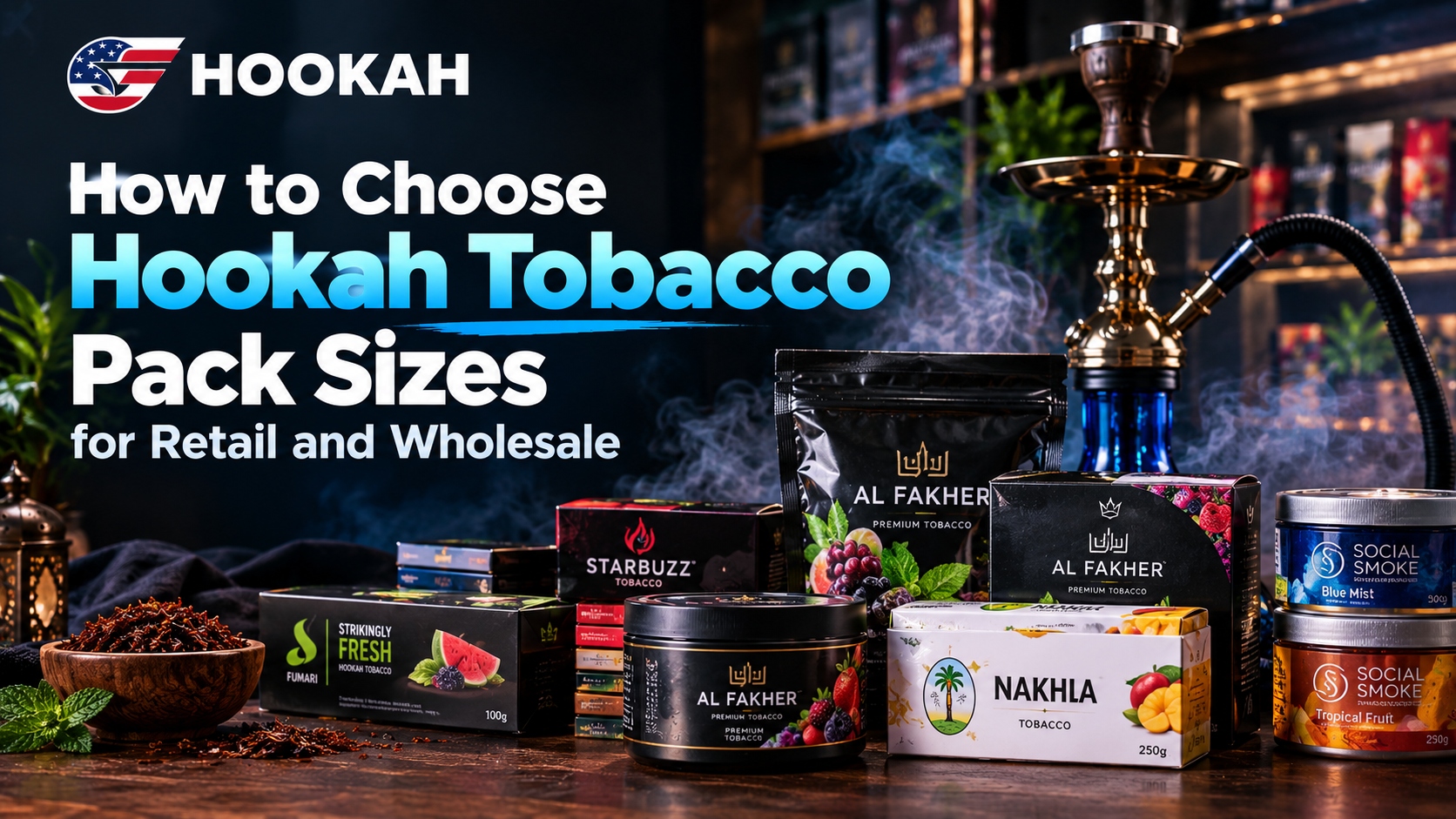
GT Hookah’s catalog includes examples ranging from 50g to 250g and 1kg formats across different tobacco lines. For example, Adalya is available in 50g, 250g, and 1000g packaging, while the Al Fakher 250g range offers a broad selection of flavors.
Each size serves a different commercial purpose.
50g Packs: Useful for Trial and Variety
Small packs can be useful when customers want to experiment.
They work particularly well for:
- New flavors
- Less familiar brands
- Customers building a flavor collection
- Trial purchases
- Retailers testing local demand
A customer may hesitate to buy a large package of an unfamiliar flavor. A smaller pack reduces that commitment.
For retailers, small packages can also make it easier to introduce new brands without committing heavily to inventory.
However, small packs may not be the most efficient option for a customer who already knows exactly what they want.
250g Packs: A Practical Retail and Lounge Size
The 250g format can serve as a useful middle ground.
It provides more tobacco than a trial-size package while remaining manageable for retail customers.
A product such as Al Fakher Hookah Tobacco 250g illustrates how a medium package can work across a broad flavor assortment.
For smoke shops, 250g packs can simplify shelf organization because retailers can build a recognizable section around one consistent size.
For smaller lounges, they can also provide a practical balance between quantity and inventory flexibility.
1kg Packs: Designed for High-Volume Use
Bulk packaging is more appropriate when a business already knows that a particular flavor has consistent demand.
High-volume hookah lounges may prefer larger packages because tobacco is consumed regularly.
Bulk purchasing can also reduce the need for frequent individual package handling.
However, buying large quantities simply because the per-unit price looks attractive can be a mistake.
The key question is not:
“Is the larger pack cheaper per gram?”
The better question is:
“Will we use the tobacco quickly enough to justify the purchase?”
Match Pack Size to Business Type
Smoke Shops
Smoke shops generally benefit from variety.
A practical assortment may include:
- Smaller packs for trial
- Medium packs for established favorites
- Selected larger packs for high-demand flavors
The exact mix should depend on customer purchasing patterns.
Hookah Lounges
Lounges typically need reliable quantities of flavors used in regular sessions.
Instead of carrying every flavor in bulk, operators can identify core flavors and purchase larger quantities only where demand supports them.
Wholesale Buyers
Wholesale purchasing requires another layer of consideration.
The buyer may be supplying multiple retail accounts, meaning a combination of pack sizes can be more useful than choosing one universal format.
Do Not Confuse Popularity With Pack-Size Demand
A flavor can be popular without requiring the largest package.
For example, a customer may regularly buy a flavor but prefer smaller packages because they rotate between several flavors.
Likewise, a lounge may consume a particular flavor quickly enough to justify bulk packaging.
Therefore, retailers should track volume by flavor and package size, not simply flavor popularity.
Use Flavor Data to Guide Pack Sizes
Your tobacco assortment should be analyzed at the SKU level.
Track:
- Flavor
- Brand
- Package size
- Units sold
- Reorder frequency
- Average time in inventory
- Customer type
- Gross margin
Suppose one flavor sells 30 small packs each month while another sells five large packs.
The two products may have similar total tobacco volume but very different purchasing patterns.
That information should influence future orders.
Consider Your Customer’s Buying Motivation
Pack size can also reflect why a customer is purchasing.
Trial Customer
This customer wants variety and may prioritize a lower initial commitment.
Regular Smoker
This customer knows preferred flavors and may favor medium or large quantities.
Lounge Operator
This buyer is focused on operational efficiency and predictable consumption.
Wholesale Customer
This buyer may need multiple sizes for different retail accounts.
Your inventory should accommodate these purchasing motivations rather than treating all customers the same.
Storage Is Part of the Decision
Large tobacco packages require appropriate storage.
Retailers should consider:
- Shelf space
- Organization
- Stock rotation
- Product labeling
- Environmental conditions
- Inventory visibility
A product that sits at the back of a crowded storage area can be difficult to manage even if the wholesale price was attractive.
A smaller but better-organized inventory can sometimes be operationally more efficient.
Build a Core-and-Test Strategy
One useful approach is to divide tobacco inventory into two groups.
Core Products
These are flavors with established demand.
Purchase quantities can be larger because the risk of slow movement is lower.
Test Products
These are newer or less proven flavors.
Use smaller quantities until customer response is clear.
This method gives retailers room to experiment without allowing experimental inventory to consume the purchasing budget.
Our guide on choosing shisha tobacco for your market provides a useful way to think about brand, flavor, and customer differences before making a purchase decision.
Consider a Multi-Size Strategy
For many businesses, the answer is not choosing one size.
A retailer could carry:
- Small packs for trial
- Medium packs for core retail demand
- Bulk packs for selected high-volume customers
This creates flexibility without requiring every flavor to exist in every size.
Common Mistakes
Buying Bulk Too Early
A lower cost per gram does not help if the product moves slowly.
Stocking Only Small Packs
This can make the inventory inefficient for regular customers and lounges.
Ignoring Local Preferences
A flavor that performs well in one market may not perform similarly in another.
Carrying Too Many Sizes
Multiple sizes for every flavor can create unnecessary SKU complexity.
Failing to Track Pack-Size Performance
Retailers should know which sizes actually sell rather than assuming the largest or smallest option is best.
The best hookah tobacco pack size depends on the customer and sales volume. Small packs such as 50g are useful for trials and variety, 250g packs can serve regular retail and smaller-volume users, and 1kg packs are better suited to high-volume businesses when demand is predictable.
FAQs
What is the best hookah tobacco size for smoke shops?
A combination of small and medium packs is often practical. Larger packages can be added for flavors with proven demand.
Is 250g hookah tobacco good for retail?
Yes. A 250g package can provide a practical balance between quantity, shelf presence, and customer affordability.
When should a lounge buy 1kg tobacco?
A lounge should consider bulk packaging when a flavor has predictable, consistent consumption and the business can store it properly.
Should every flavor be stocked in multiple sizes?
Not necessarily. Multiple sizes should be reserved for flavors where customer demand justifies the additional SKUs.
Are smaller tobacco packs better for new flavors?
They can be useful because they allow customers to try unfamiliar flavors with less commitment and allow retailers to test demand.
How should wholesalers choose tobacco pack sizes?
Wholesalers should consider the needs of their retail accounts, purchasing volume, storage requirements, and demand by flavor and package size.
Conclusion
Choosing hookah tobacco pack sizes is an inventory decision, not simply a packaging decision. Retailers should match small packs with trial behavior, medium packs with regular purchasing, and larger formats with predictable high-volume consumption.
The strongest strategy is usually a balanced one. Track actual sales, separate core flavors from test products, and adjust package quantities as customer behavior becomes clearer. GT Hookah’s tobacco assortment gives wholesale buyers access to multiple brands and package formats for building that type of flexible inventory.