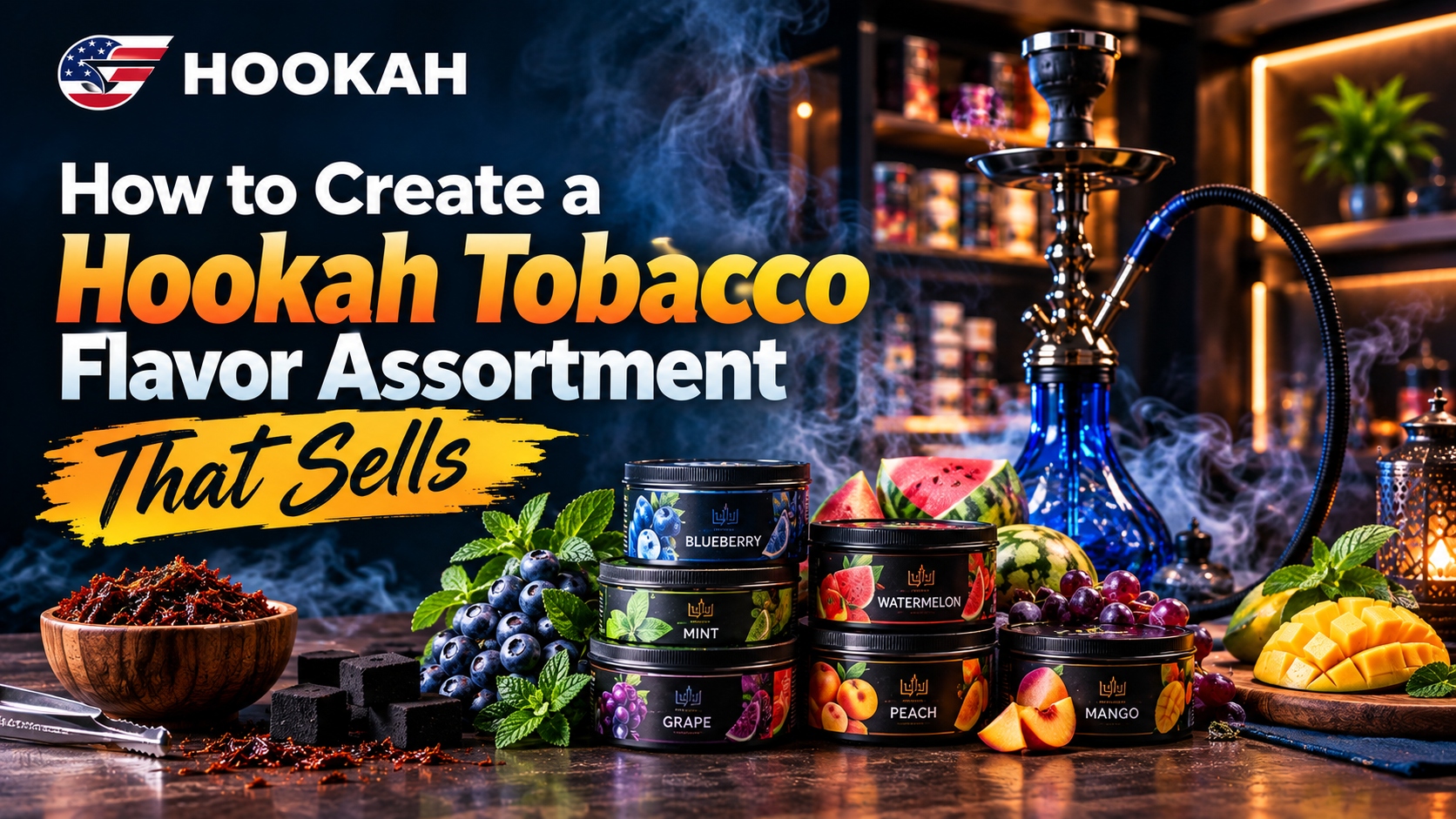
A smoke shop does not need every hookah tobacco flavor available to create a strong tobacco section. What matters is building an assortment that gives customers enough variety without filling shelves with slow-moving products.
A good hookah tobacco flavor assortment should cover familiar profiles, different flavor families, established brands, and selected products that give customers something new to try.
The most effective strategy combines proven demand with controlled experimentation.
Start With Flavor Families
Rather than choosing flavors one by one, organize the assortment into groups.
Useful categories include:
- Fruit
- Mint and cooling
- Fruit and mint combinations
- Citrus
- Dessert
- Beverage-inspired
- Traditional profiles
- Herbal or nicotine-free alternatives
This makes it easier to identify gaps in the assortment.
For example, if a store has ten fruit flavors but no mint or citrus options, adding another fruit flavor may not improve variety as much as filling the missing category.
Keep Familiar Profiles at the Core
Every tobacco assortment needs recognizable flavors.
Customers often want something they already know.
Examples of familiar flavor directions include:
- Two apple
- Grape
- Mint
- Watermelon
- Lemon
- Mango
- Strawberry
- Peach
These profiles can form the foundation of the shelf.
The exact brands should be determined by local demand and supplier availability.
Add Combination Flavors
Once the core is established, combination flavors can increase variety.
Examples include:
- Fruit + mint
- Berry + citrus
- Tropical fruit blends
- Fruit + cooling
- Dessert + fruit
Combination flavors give experienced customers something different while remaining recognizable.
Include Premium Brands Strategically
Brand selection matters alongside flavor selection.
A store can carry similar flavor profiles from different brands because customers may have brand preferences.
For example, Adalya Hookah Tobacco 250g offers a broad flavor selection and is available in multiple package sizes.
The objective is not to carry every brand.
Instead, select brands that give customers meaningful choices in:
- Price
- Flavor style
- Tobacco preparation
- Brand reputation
- Origin
- Package size
Build Around Your Local Customer
Flavor preferences are not identical across every market.
A shop near a large lounge customer base may need a different assortment from a convenience-oriented smoke shop.
Review:
- Current sales
- Customer requests
- Repeat purchases
- Brand preferences
- Popular combinations
- Slow-moving flavors
Your assortment should reflect the customers who actually walk into your store.
Our guide on choosing the right shisha tobacco for your market can help frame this decision around the specific market rather than general flavor trends.
Use a Core-and-Test Model
One of the safest ways to introduce new flavors is to divide inventory into two groups.
Core Flavors
These are proven sellers.
They should receive the largest share of inventory attention.
Test Flavors
These are newer, less familiar, seasonal, or experimental products.
Order them in smaller quantities and track their performance.
If a test flavor performs well, it can become part of the core assortment.
Avoid Flavor Duplication
A retailer can have 40 tobacco SKUs and still have limited real variety.
For example, stocking twelve different berry combinations may create less useful variety than having:
- 3 fruit flavors
- 2 mint flavors
- 2 fruit-mint flavors
- 2 citrus flavors
- 2 dessert flavors
- 1 traditional profile
- 2 experimental flavors
The exact numbers are not universal, but the principle is important: variety should mean meaningful differences.
Consider Package Size
Flavor assortment and package size should be planned together.
Small packs can be useful for testing new flavors.
Medium packs can work well for established retail products.
Larger packages may be appropriate for lounges or high-volume customers.
This allows retailers to test flavors without committing large amounts of inventory.
Do Not Ignore Nicotine-Free Options
Some customers specifically seek tobacco-free or nicotine-free alternatives.
That does not mean every store needs a large nicotine-free section.
But where there is customer demand, a small dedicated assortment can provide an additional choice.
GT Hookah’s guide to nicotine-free hookah options explains the different types of alternatives and how they compare.
Retailers should also ensure their product descriptions and customer guidance accurately reflect the products being sold.
Track Flavor Performance
A flavor assortment should be managed with actual sales information.
Track:
- Units sold
- Revenue
- Gross margin
- Reorder frequency
- Package size
- Brand
- Flavor family
- Time in inventory
This helps identify patterns.
For example, you may discover that customers buy fruit flavors frequently but prefer fruit-mint combinations for repeat purchases.
That insight is more useful than simply looking at total tobacco sales.
Use Customer Questions as Data
Retail staff hear valuable information every day.
Pay attention when customers ask:
- “Do you have a strong mint?”
- “What tastes like mango?”
- “Which flavor is less sweet?”
- “Do you have this brand?”
- “What pairs well with grape?”
- “Do you have something nicotine-free?”
These questions reveal demand even when the requested product is not currently stocked.
Record them.
Create a Flavor Navigation System
A tobacco display should make shopping easy.
You can organize products by:
Flavor
Fruit, mint, citrus, dessert, etc.
Brand
Useful for customers who already know what they want.
Price
Helpful for customers with a specific budget.
Pack Size
Useful for retail and larger-volume buyers.
A combination of these systems can work, but avoid making the shelf overly complicated.
Use Existing Winners to Introduce New Products
If customers already buy a particular fruit flavor, use that demand to introduce another flavor in the same family.
For example:
Existing winner: Mango
Test product: Mango + Mint
Or:
Existing winner: Grape
Test product: Grape + Mint
This is generally more logical than introducing an unrelated flavor with no connection to established customer behavior.
Review the Assortment Regularly
The tobacco shelf should evolve.
A simple monthly review can identify:
- Top sellers
- Slow movers
- New opportunities
- Out-of-stock issues
- Duplicate flavor profiles
- Unbalanced flavor families
Products that consistently fail to move can be reduced or removed.
Products with consistent demand can receive deeper inventory.
Common Mistakes
Stocking Too Many Flavors at Once
Large variety creates more inventory risk.
Ignoring Core Flavors
Experimental products should not replace proven sellers.
Carrying Too Many Similar Flavors
Several nearly identical profiles do not necessarily create useful variety.
Ignoring Package Size
Flavor demand and package-size demand are connected.
Following Trends Without Local Data
A product that is popular elsewhere may not perform in your market.
A strong hookah tobacco flavor assortment should combine familiar core flavors, fruit and mint profiles, combination flavors, premium brands, and a smaller number of test products. Retailers should use local sales data and customer requests to decide which flavors deserve deeper inventory.
FAQs
How many hookah tobacco flavors should a smoke shop stock?
There is no universal number. The right assortment depends on store size, customer demand, available inventory budget, and how quickly products sell.
What flavor categories should a retailer start with?
Fruit, mint, fruit-mint combinations, citrus, and traditional profiles provide a practical starting point. Dessert and experimental flavors can be added based on demand.
Should retailers stock premium tobacco brands?
Yes, if premium products fit the customer base. A focused premium selection can provide additional brand and flavor choices without overcomplicating the shelf.
How should retailers test new flavors?
Start with smaller quantities, monitor sales, ask customers for feedback, and promote successful test products into the core assortment.
Should nicotine-free hookah products be included?
They can be included when customer demand supports them. A small dedicated selection can provide an alternative category without taking over the main tobacco section.
How often should a retailer review its tobacco assortment?
A monthly inventory review is a practical starting point, with more frequent monitoring for high-volume products and new releases.
Conclusion
Creating a successful hookah tobacco flavor assortment is about balance. Retailers need familiar flavors that customers already recognize, but they also need enough variety to encourage exploration.
A core-and-test strategy makes this easier. Keep proven flavors well stocked, introduce new products in controlled quantities, monitor flavor families, and use customer feedback to guide future orders.
For wholesale buyers, GT Hookah provides access to a broad shisha tobacco selection that can support different flavor strategies, package sizes, brands, and customer segments.