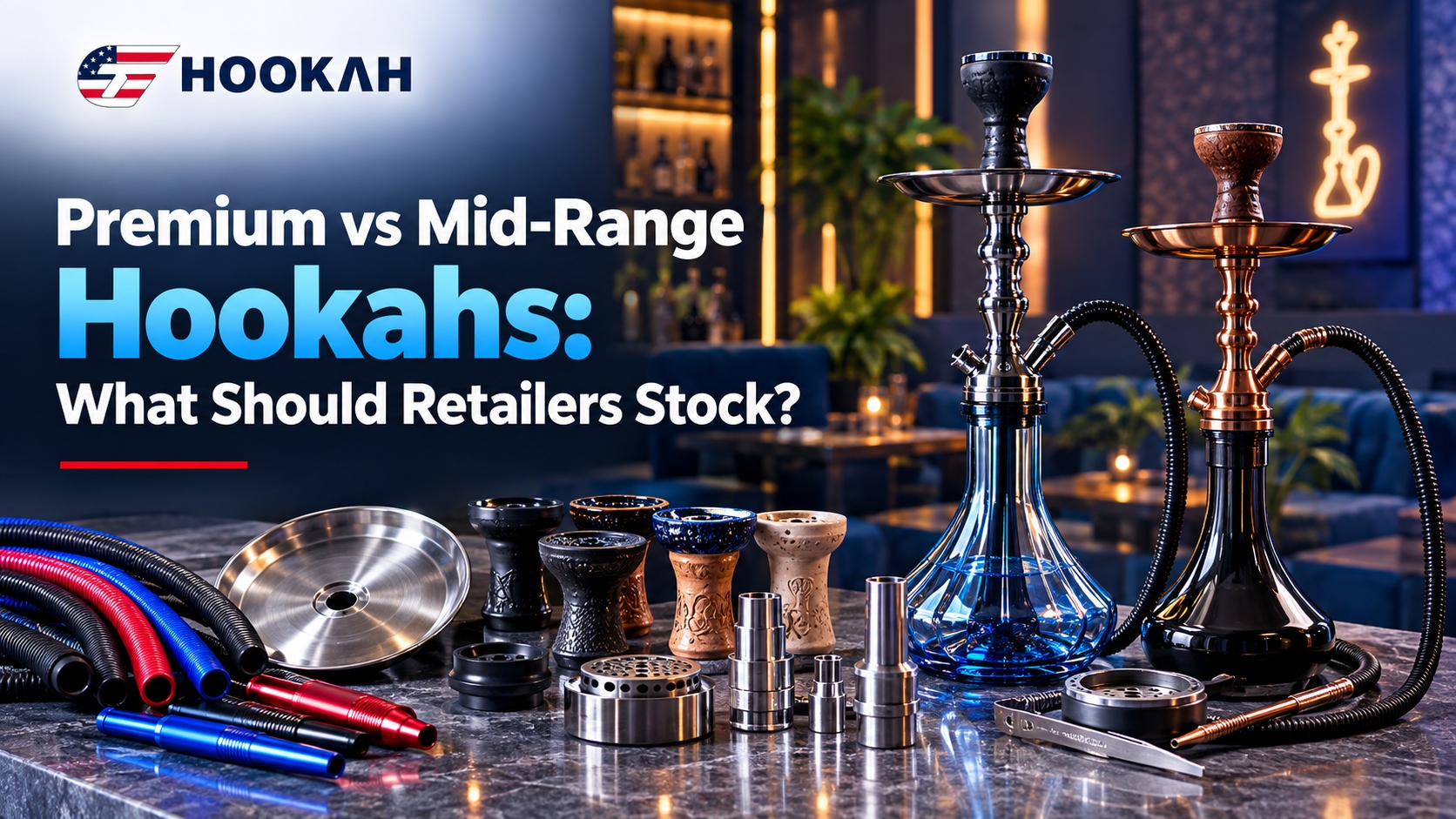
Retailers often face a difficult inventory question: should they put more money into premium hookahs, or focus on mid-range products that appeal to a broader customer base?
The answer is rarely one or the other.
A strong retail assortment can use both categories, provided each has a clear role.
Understanding premium vs mid-range hookahs helps retailers build a price ladder that gives customers choices while preventing the inventory budget from becoming concentrated in one segment.
What Makes a Hookah Premium?
Premium positioning can come from several factors:
- Material quality
- Manufacturing precision
- Airflow engineering
- Advanced purge systems
- Modular construction
- Brand reputation
- Design
- Specialized features
- Finish and craftsmanship
Premium does not simply mean “expensive.”
A premium hookah should give the customer a reason for its higher price.
What Is a Mid-Range Hookah?
A mid-range hookah generally sits between entry-level products and high-end systems.
The customer may want:
- Better construction than a basic hookah
- Reliable performance
- Attractive design
- Useful features
- Reasonable long-term value
This segment can be important for customers who understand hookah but are not ready to make a premium purchase.
Why Retailers Need Both
Customers have different budgets and expectations.
If a store stocks only premium hookahs, it may exclude customers who want a capable setup without spending heavily.
If the store stocks only mid-range models, it may lose customers who specifically want advanced engineering or premium materials.
A tiered assortment solves both problems.
Build a Three-Level Price Ladder
Entry-Level
Focus on accessibility and basic functionality.
Mid-Range
Focus on better materials, performance, and design.
Premium
Focus on engineering, materials, advanced features, and brand positioning.
Retailers do not need equal quantities at each level.
Instead, inventory depth should reflect local demand.
Premium Hookahs Can Serve as Display Products
A premium hookah can have value even when it sells less frequently.
Why?
Because it communicates what the store is capable of offering.
A customer may enter looking for a mid-range hookah and discover premium options. Another customer may specifically visit because the store carries a particular premium brand.
Premium products can therefore influence the perceived depth of the entire category.
Mid-Range Hookahs Provide Accessibility
Mid-range products can serve customers who are upgrading from an entry-level system.
They may already know that they want:
- Better airflow
- Improved materials
- Easier cleaning
- Better durability
- More refined design
But they may not need every advanced feature offered by a flagship product.
This makes the mid-range segment a useful bridge.
Consider Materials
Material is one of the factors customers increasingly ask about.
Premium hookahs often emphasize stainless steel, aluminum, precision-machined components, and other durable materials.
Our guide on why stainless steel grades matter in premium hookahs explains why material quality can affect durability, corrosion resistance, and long-term performance.
Retail staff should be able to explain these differences without turning every sales conversation into a technical lecture.
Airflow Matters
Premium buyers often care about airflow characteristics.
A well-engineered system can provide a different draw experience from a basic hookah.
Retailers should train staff to explain:
- Draw resistance
- Hose configuration
- Purge design
- Diffuser options
- Airflow path
The premium hookah airflow testing guide can help staff understand why airflow engineering matters.
Premium Customers Often Compare Brands
Customers shopping at the high end may already have a shortlist.
They might compare:
- Moze
- Aeon
- Steamulation
- Other premium manufacturers
Retailers should therefore understand the basic differences between the brands they stock.
The Moze vs Aeon vs Steamulation comparison is useful for understanding how premium brands can differ in engineering, airflow, design, and usability.
Choose Premium Products With Clear Differentiation
Do not stock several expensive hookahs that all serve exactly the same customer.
Instead, choose premium models with different selling points.
For example:
- One model focused on engineering
- One focused on design
- One focused on modularity
- One focused on multi-hose use
- One focused on compact premium performance
This creates more meaningful choices.
A Premium Product Should Have Supporting Inventory
A premium hookah is easier to sell when the retailer can also provide compatible accessories.
Consider stocking:
- Replacement hoses
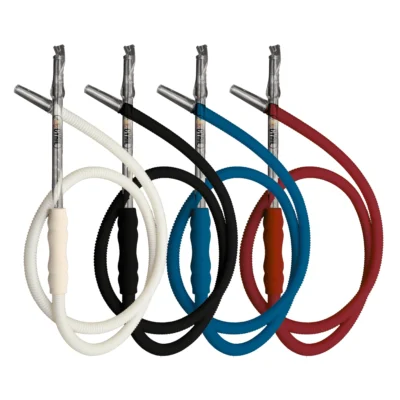
- Original adapters
- Bowls
- HMDs
- Mouthpieces
- Replacement seals
- Model-specific components
This creates a complete ecosystem around the premium product.
What Should Retailers Measure?
Do not judge premium inventory only by units sold.
Track:
- Gross profit
- Days in inventory
- Customer inquiries
- Brand searches
- Accessory sales
- Repeat purchases
- Trade-up purchases
A premium product may sell fewer units while generating meaningful revenue and accessory sales.
Common Mistakes
Buying Too Many Premium Models
High-ticket inventory can tie up capital.
Ignoring the Mid-Range Segment
Not every customer needs a flagship hookah.
Competing Only on Price
Premium products should be sold based on meaningful differences rather than discounts alone.
Not Training Staff
Premium customers often ask more detailed questions.
Stocking Premium Hookahs Without Accessories
A lack of compatible parts can make premium purchases less attractive.
Retailers should generally stock both premium and mid-range hookahs. Mid-range products provide accessible upgrades for customers who want better performance without flagship pricing, while premium hookahs serve customers who prioritize engineering, materials, design, and advanced features. The exact inventory ratio should depend on local demand and sales data.
FAQs
Are premium hookahs worth stocking in a smoke shop?
Yes, when the local customer base includes buyers interested in higher-end equipment. Premium products can also strengthen the overall positioning of the hookah category.
Should retailers stock more mid-range or premium hookahs?
Usually, inventory depth should favor the segment with stronger demand, while a smaller selection can cover the other category.
What makes a premium hookah different?
Premium positioning can involve materials, precision engineering, airflow design, modularity, advanced features, and brand reputation.
Why are mid-range hookahs important?
They provide an upgrade path for customers who want better equipment without paying flagship-level prices.
Should premium hookahs have matching accessories?
Ideally, yes. Compatible hoses, bowls, adapters, seals, and other parts make premium equipment easier to maintain and upgrade.
How should retailers evaluate premium hookah sales?
Look beyond unit volume. Gross profit, inventory turnover, accessory purchases, customer inquiries, and trade-up sales also matter.
Conclusion
The decision between premium vs mid-range hookahs should not be treated as an either-or choice. A well-planned retail assortment can use mid-range products to serve the broader market while maintaining a carefully selected premium range for customers who value engineering, materials, design, and advanced performance.
The key is differentiation. Each product should have a clear reason for being in the assortment. GT Hookah’s wholesale catalog gives retailers access to different hookah categories and brands that can support a balanced price-tier strategy.