Bowls are one of the most important accessory categories in a hookah store. Customers replace them, experiment with different styles, and often want a bowl that matches a specific tobacco or smoking preference.
For retailers, the challenge is deciding which types to stock without filling shelves with products that serve nearly identical purposes.
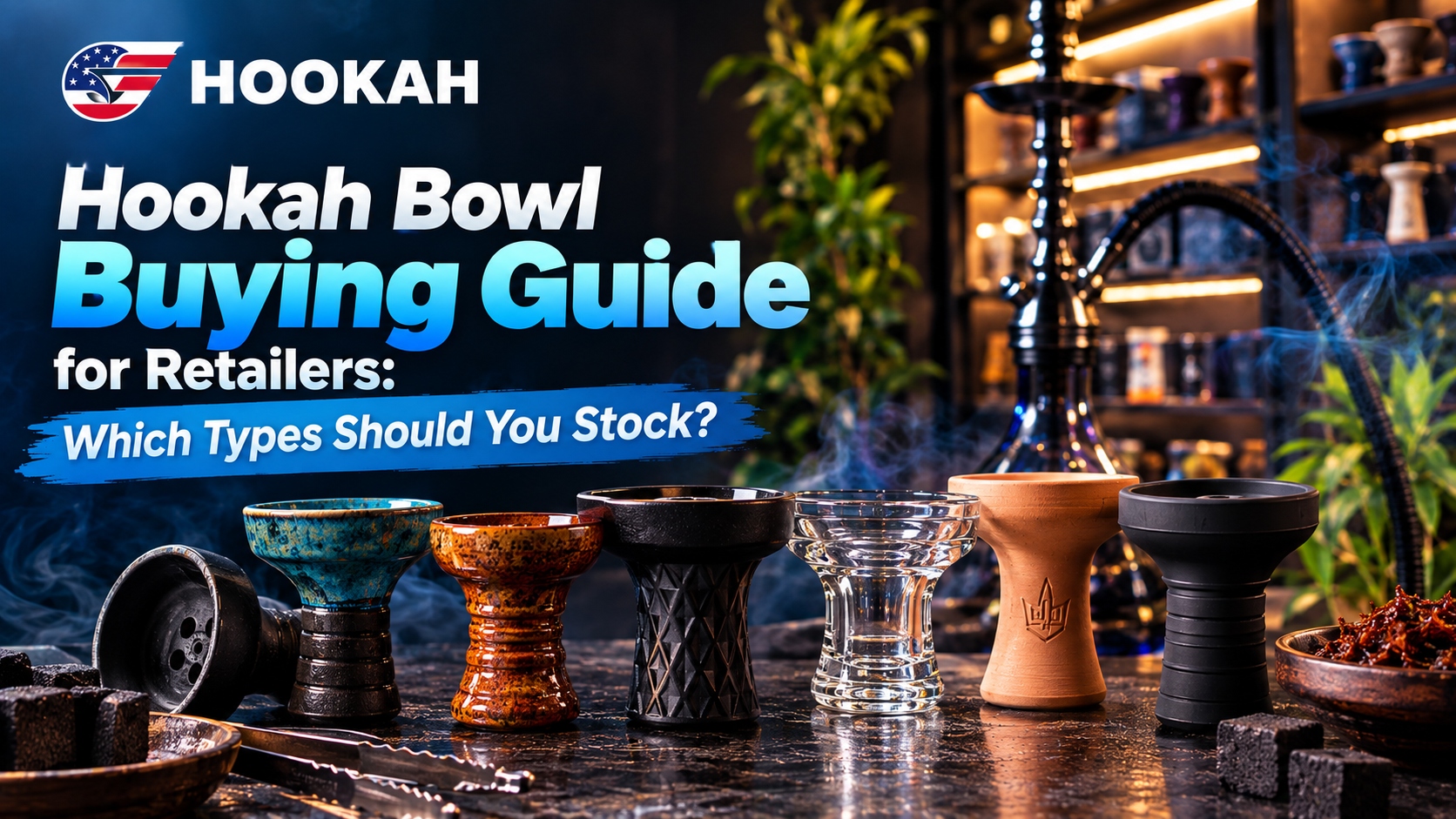
The right selection of hookah bowls for retailers should cover meaningful differences in design, material, capacity, airflow, heat management, and customer use.
Why Bowls Deserve Dedicated Shelf Space
A complete hookah is a durable purchase. Bowls are different.
Customers may buy additional bowls because they want:
- Different session styles
- Better heat management
- A new material
- A different tobacco capacity
- A second setup
- A replacement for a damaged bowl
- A bowl that works better with a particular HMD
This makes bowls a practical category for both smoke shops and hookah-focused retailers.
Start With Bowl Types
Retailers do not necessarily need every bowl design.
The most useful approach is to stock a few categories that have clearly different purposes.
Phunnel Bowls
Phunnel bowls are widely used with modern, juicy tobacco blends.
The raised central spire helps keep liquid from draining directly into the stem.
They can be useful for customers who prioritize:
- Flavor retention
- Modern tobacco blends
- Longer sessions
- HMD use
The Cyril Design Bowl is an example of a phunnel-style bowl with a design focused on heat distribution and airflow.
Traditional Bowls
Traditional bowls use a different airflow design and can be useful for tobacco styles that benefit from a more direct packing approach.
They are worth carrying because not every customer prefers a phunnel setup.
Clay Bowls
Clay remains a popular bowl material because of its heat characteristics.
Retailers can consider different clay constructions and sizes depending on their customer base.
The Cyril Bowl X Series – Anthoshka is a high-temperature clay bowl designed around heat distribution and compatibility with a range of HMDs.
Silicone Bowls
Silicone bowls can appeal to customers looking for durability and easy handling.
They may be especially useful as practical or travel-oriented options.
However, retailers should avoid making the entire bowl section silicone-focused because different customers value different materials.
Match Bowls to Tobacco
A retailer’s bowl selection should reflect its tobacco assortment.
Modern moist tobacco blends often pair naturally with phunnel-style bowls, while traditional or dryer tobacco may be used with traditional bowl designs.
This is why staff should understand the connection between:
Tobacco → Bowl → Heat Management
Customers often ask which bowl they should buy without knowing that tobacco preparation affects the choice.
Our guide on choosing the right hookah bowl for your setup explains this relationship in more detail.
Stock Different Capacities
Capacity is another useful way to organize inventory.
A smaller bowl can be useful for shorter sessions or customers who want to conserve tobacco.
Larger bowls may suit longer sessions or lounge applications.
Retailers should avoid stocking only one capacity because customer needs vary.
Consider HMD Compatibility
Many customers now use heat-management devices.
When selecting bowls, retailers should understand which bowl shapes work with common HMD designs.
Important factors include:
- Bowl opening
- Diameter
- Flatness
- HMD contact area
- Bowl height
A bowl that performs well with foil may behave differently with an HMD.
Stock Bowls With Different Price Points
A retailer can organize bowls into:
Entry-Level
Practical products for first-time buyers.
Mid-Range
Better materials or construction for customers who want an upgrade.
Premium
Specialized designs, premium materials, distinctive craftsmanship, or advanced performance characteristics.
This gives customers choices without forcing them into a single price range.
Retailers Should Avoid Overlapping SKUs
A common inventory mistake is stocking many bowls that are nearly identical.
Instead of buying ten variations of one design, consider building a smaller range with clear differences.
For example:
- One traditional clay bowl
- One phunnel clay bowl
- One premium phunnel
- One durable silicone option
- One larger lounge-oriented bowl
The exact assortment should be adjusted according to actual sales.
Display Bowls by Customer Need
Product organization can make a major difference.
Instead of simply displaying bowls by brand, consider grouping them by purpose:
Beginner
Simple and affordable options.
Flavor-focused
Phunnel bowls and products designed for modern tobacco.
Long-session
Larger-capacity options.
Premium
Higher-end materials and craftsmanship.
Lounge
Durable and repeat-use options.
This makes it easier for customers to understand the differences.
Teach Staff How to Recommend Bowls
Staff should ask a few simple questions:
- What tobacco do you use?
- Do you prefer shorter or longer sessions?
- Do you use an HMD?
- Is the bowl for home or lounge use?
- Are you replacing an existing bowl or upgrading?
These questions are more useful than simply asking how much the customer wants to spend.
Watch for Compatibility
Retailers should also understand how the bowl connects to the hookah.
Check:
- Bowl stem size
- Grommet type
- Height
- HMD compatibility
- Hookah tray clearance
A bowl should not be recommended solely because it looks good.
Consider Bundling
Bowls can also be paired with other products.
For example:
- Bowl + HMD
- Bowl + tobacco
- Bowl + foil
- Bowl + cleaning accessories
This can make the purchase easier for beginners while giving experienced customers a reason to upgrade.
A complete setup should always be considered when planning inventory. GT Hookah’s guide to building a complete Quasar hookah setup provides an example of how the bowl fits into a broader equipment selection.
Retailers should generally stock a balanced selection of phunnel, traditional, clay, and durable silicone bowls across different sizes and price points. The assortment should match local tobacco preferences, HMD usage, customer experience levels, and lounge demand.
FAQs
What type of hookah bowl should a retailer stock most?
There is no universal best type. Phunnel bowls are useful for modern moist tobacco, while traditional bowls serve different tobacco and customer preferences.
Should smoke shops sell clay bowls?
Yes. Clay bowls are an important category and can serve customers looking for specific heat-management characteristics.
Are silicone bowls worth stocking?
They can be useful for customers who value durability and convenience, particularly as part of a broader bowl assortment.
How many bowl types should a new retailer carry?
Start with a focused selection covering meaningful differences rather than stocking many nearly identical products.
Should retailers stock bowls compatible with HMDs?
Yes. HMD compatibility is an important consideration for modern hookah customers.
What questions should staff ask before recommending a bowl?
Ask about tobacco type, session length, HMD use, existing hookah setup, and whether the customer wants a replacement or upgrade.
Conclusion
The best assortment of hookah bowls for retailers is not the largest assortment. It is the one that covers real differences in tobacco use, material, capacity, heat management, and customer preferences.
A focused selection of phunnel, traditional, clay, silicone, entry-level, and premium bowls gives retailers flexibility without creating unnecessary inventory complexity. GT Hookah provides retailers and wholesale buyers with a range of bowl options that can be integrated into broader hookah and accessory assortments.